Showing posts with label career. Show all posts

Saturday, 31 May 2025

GYCZ – We Focus On Our Flaws, Not Strengths


Sharing this post because it’s such a thought provoking read. I have had the experience described in the excerpt below.


“When a leader gets a 360 feedback report from his or her direct reports, peers, manager, and others, his or her natural instinct is to skim past positive ratings and comments and look at “where I need to improve.” Zenger Folkman research shows unless there’s a fatal flaw needing immediate attention, this is off track. The best that MIGHT happen is the leader raises a few of his or her competencies from poor to average.”


The article recommends focusing on competencies that truly drive results in various disciplines, and emphasizing these.

I find the content from the Clemmer Group and their associates at Zenger Folkman to be consistently high quality.


Link to the article here

https://www.clemmergroup.com/articles/leadership-competency-models-many-failing-make-flourish/


Thursday, 16 June 2022

Perfectionism Is A “Kind Of Disease”

Perfectionists don’t get anything done. I’m not sure that’s entirely true, although perfectionist tendencies can certainly be a barrier to production. And the actor who played Mr. Bean seems to agree.

Rowan Atkinson (Mr. Bean)

Rowan Atkinson, known for the character Mr. Bean among others, recently said “perfectionism is a kind of disease” and that he rarely laughs when he watches his own work. He elaborated on “thinking about whatever you’re doing, (that) you could do better,” and he sees that as a problem.

The article is here

 https://www.thetimes.co.uk/article/rowan-atkinson-interview-man-vs-bee-netflix-sw7gfcvfc

I’m not convinced that believing you can always do better is a problem, but if it prevents someone from producing anything, then that is certainly a problem. It’s a surprising comment from Atkinson because he has been very prolific over his career.

Seth Godin on Perfectionists

My friends Dave Veale and Greg Hemmings host a podcast. They are quite prolific as well with over 200 episodes. Their Boiling Point Podcast has had some amazing guests over the years.  One of the most popular was marketing guru Seth Godin.  Godin has written several books and he writes the exceptionally popular blog  https://seths.blog/.  When Seth visited The Boiling Point, he told the hosts that perfectionists are cowards because they never bring anything to completion.   I’ve read his works before and he has pushed against perfectionism, but calling perfectionists cowards was quite dramatic and quite strong language.  Likely too strong but sometimes we need to be a little dramatic to land a point.  You can listen to the episode here.

https://boilingpointpodcast.com/boiling-point/seth-godin-says-perfectionists-are-cowards-heres-why/

Minimum Viable Product

Godin continued and clarified that he wasn’t indicating to ship product before it was ready, but to avoid trying to create the perfect product. An abundance of business material preaches to deliver a minimal viable product to a market that you believe needs the product, and let customer feedback shape future, improved, more feature-rich versions. 

I understand Godin’s strong comments. I also understand the perceived risk of content producers, however I believe that there will always be people that dismiss your work regardless how much polishing that takes place.

Tough Feedback in Philadelphia

I have a personal example of this. I‘ve delivered hundreds of presentations over the years. Sometimes after a presentation, the hosts collect written feedback and comments, primarily for their own purposes in determining if they should re-book a speaker in the future. Sometimes they share the comments with the speaker, as in this example.

About ten years ago I delivered a presentation on situational leadership to a group of about one-hundred attendees in Philadelphia.  It went very well.  As always, after the presentation I thought ‘whoops I forgot to mention this minor point,’ and ‘one of those transitions could have been much more smooth.’ But it went well. The audience was engaged, and there were lots of questions.


Feedback Comment Forms

Afterwards the hosts collected comment forms.  Usually, attendees simply comply, and quickly and half-heartedly check off high scores with comments like ‘was great,’ ‘speaks a little quickly at times,’ and ’good material.’    At this event three people wrote ‘doesn’t know what he’s talking about’ ‘never want to see this speaker again’ and ‘I wasted 45 minutes.’  These are direct quotes because I’ve kept these forms, simply as a reminder to me.

These opinions are valid. These three attendees clearly didn’t benefit from my presentation. Their comments remind me that there will often be attendees who don’t enjoy my work. Rarely will an entire audience, of a significant size, enjoy a presentation. That shouldn’t stop me, and it shouldn’t stop you.

Perfectionist Tendencies

If you have perfectionist tendencies, take solace in knowing that someone won’t enjoy your work. But many will. If you think someone might not like your work, you’re correct.  That shouldn’t stop you from releasing your work in some form. Perhaps with a minimal viable version that will take you closer and closer to your ultimate product.
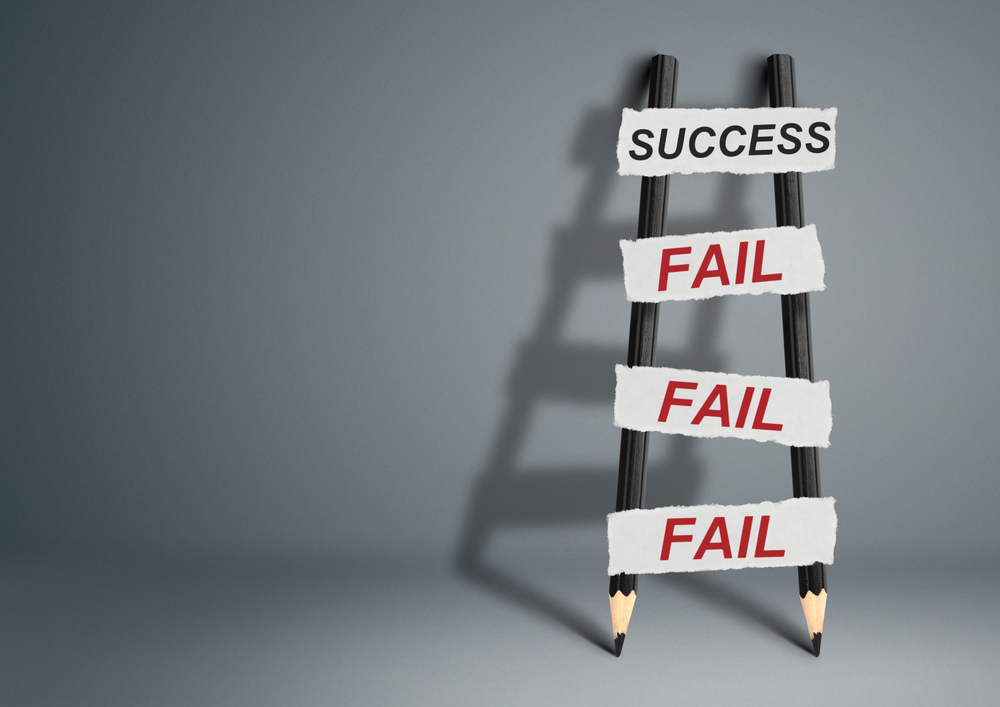


Wednesday, 12 January 2022

The Cost of Poor Communication Skills

Yesterday I was speaking with a Toastmasters friend from the eastern U.S. and he told me that the Toastmasters clubs in his area will be soon benefitting from some press coverage, sadly at the expense of some other worthy membership-based organizations.  He said that a newspaper columnist decided to write a series on the theme of New Years resolutions and she contacted organizations that people often turn to in order to act on these resolutions, for example, gyms, yoga studios, and others.   My friend had an interview with the columnist and at the end of the interview the columnist said she’s had trouble getting a response from many organizations but when she contacted toastmaster clubs each was very quick to respond.  Why do you suppose that is?

Is Public Speaking A Core Skill?

Are Toastmasters clubs better at public relations than other small organizations?   While Toastmasters is a large organization operating in 149 countries, each of the 16,000 clubs is a small organization, and in essence a very small business.  I’d like to believe the clubs are especially strong at PR but I don’t think so.  However, I know that the club members are confident about expressing their thoughts and ideas, and I speculate this is why our club members are prompt to respond to requests for interviews.  As a result of this confidence, more clubs will be featured by the columnist.  This is an opportunity lost for some organizations, and an opportunity gained for these Toastmasters clubs.

Do we treat public speaking as a core skill?  We should. It’s difficult to persuade a team, or make a sale to a prospect if you can’t communicate clearly. Related to this, yesterday I attended a briefing from a U.S. university about a program I have some interest in.   The session started with an introduction by the administrative lead, and further details were provided by the professor who delivers the program.   The professor was a clear communicator with simple, short sentences and well-organized thoughts.  The administrative lead was a poor communicator.  His presentation was not well organized and filled with ums and ahs.   At one point he uttered ah three times in a row as he struggled to gather his thoughts.  Silence would have been preferred, and fine. I found his speech habits terribly distracting in working to receive his message

Efforts Of A Listener

When someone is not skilled as a communicator, a listener will usually make the effort to interpret and organize what he or she is hearing.  And we’ll fight through unhelpful utterances like um and ah – to a point.  If we determine the information isn’t pertinent, or interesting, or too difficult to interpret, we stop making the effort, and this was the case for me yesterday.  I listened to the professor and enjoyed her content, but when the administrator resumed the session towards the end to make the pitch to signup, I listened briefly but then wasn’t willing to endure more of his poorly communicated speech.  That is likely my loss.  

So yesterday I heard the story of how some Toastmasters clubs will get some press coverage because they were prompt and confident to communicate their story. And I experienced a sales pitch so poor in its presentation that I disconnected from the session before hearing the full pitch.

There are benefits to good communication, and costs to poor communication.  Sometimes those costs aren’t readily recognizable.  Is this lack of skill in public speaking holding back you or your organization?

A Perspective from SHRM on The Cost of Poor Communication

Here is a perspective from the The Society for Human Resource Management

https://www.shrm.org/ResourcesAndTools/hr-topics/behavioral-competencies/communication/Pages/The-Cost-of-Poor-Communications.aspx


Wandering About, Messing About - Changing Perspective

When I travel, I find that I become super alert and aware. Everything seems new and different, and I’m more appreciative of everything aro...