Showing posts with label public speaking. Show all posts

Wednesday, 4 December 2024

A Speech Is Not An Essay

I see quite a number of developing speakers prepare excellent content, in the style of an essay, and then stand and read it to their audience with perfunctory attempts to make eye contact with attendees. Members in the audience will work hard to follow along, and organize what they hear from the speaker, however, if a speech is mostly read to an audience, the speaker’s opportunity to truly connect with attendees and clarify content is lost.  If the audience doesn’t receive the message, what was the point of speaking?

A speech isn’t an essay. Occasionally it is important to write precise content and then deliver the material exactly as written. But audience members will feel that they’re being read to. Ideally, a speaker will make frequent eye contact, observe how audience members react assessing message receipt, and then modify their approach if needed.  


Source: https://assets.ltkcontent.com/images/34093/male-student-giving-speech_2516ce170a.jpg)


Contrast: Essay Versus Speech

An essay provides the opportunity to write, rewrite, and rephrase until you’ve documented precisely what you wish to communicate. Readers can consume the essay at their leisure, and re-read sections, underline, and take other steps to process the content.

A speech is an interaction with an audience, and often a distracted audience. A speech provides abundant opportunity for the speaker to clarify content and test for message receipt. In my experience, it is helpful to repeat key points in a speech. While listening to a speech, a listener’s attention will likely drift. While reading an essay, a reader can return to content they’ve not absorbed, or want to consider again.

Organizing Your Speech

First, when developing your speech, I advise to capture all possible content, all your ideas, all the possible speech elements, related to your topic including your key lessons, research, and especially illustrative stories. I use the bubble technique or fishbone technique to capture this.

As a rule of thumb, I expect any speech element to require two to three minutes to deliver to an audience.  For me, this is a helpful planning tool to estimate potential speech duration.

Second, define the key message you wish to leave with this precise audience, based on their interests and experience with your topic. This key message is your speech purpose.

Third, select enough speech elements to consume your time allowance and support your key message. Sometimes speakers will try to share everything they know about a topic, or offer too much background to an already well-informed audience. Select only the speech elements that support your speech purpose and specific audience.

Now that these steps are complete, you’re ready to go. You can practice the brief speech elements independently, assess their sequencing and fit, and polish your delivery.

Your Delivery

When delivering your speech, I advise;

1.     Offer brief introductory remarks if necessary

2.   State your speech purpose

3.   State the speech elements you’ll share with the audience

4.   Speak to each element

5.    Test for comprehension if you’re comfortable doing so

6.   Conclude by restating your speech purpose, and briefly summarizing your speech elements.  (Some members of your audience were distracted)

Conclusion

A speech is different from an essay. You can prepare an essay, and stand and read it to an audience, however, you’ve wasted the opportunity to interact with your audience, and supplement content in response to audience reception.

Here are some more thoughts on this subject https://gycz.blogspot.com/2023/05/my-process-preparing-keynote.html


Sunday, 19 November 2023

Monday, 13 November 2023

Short Cut To Audience Analysis

Recently I was working with a speaker who was scheduled to deliver a keynote-style speech at a regional event. To practice for the big event, she planned a trial run of her content with a smaller audience.

When she and I talked, I asked her to clarify the relevance of her speech for the smaller audience.  She said that she simply had a prepared text she needed to deliver to the larger audience, so this was a chance to practice the material before this smaller audience. I encouraged her to spend some time considering the attendees at the smaller audience, and then plan some small adjustments to shape her content for that audience. 

She later told me her trial run went exceptionally well, as did her presentation to the regional group.

To improve the relevance of your topic with an audience, some audience analysis can be very useful.

Enable The Audience To See Relevance of Your Topic

Any speech delivered to any audience must have meaning for the attendees. Why would anybody speak about a topic that has no meaning for the members of the audience?

A speaker and/or introducer should make the relevance of the topic very clear as the presentation begins. This enables the audience to organize and process the speech content. Please invest some time to empower your audience to process your message.

You can invest a great deal of time on audience analysis considering age, demographics, psychographics, and many other factors. Or you can take this short cut with the event organizer or person who invited you to speak.

Audience Analysis Short-Cut

To better understand your expected audience, simply have a conversation with the person responsible for the quality of the event.  For example, I’m often asked to speak on topics of leadership and public speaking. A common discussion I have with event organizers sounds similar to this;

“So, you’ve asked me to speak about leadership. Are there any particular areas you’d like to see covered?”

“Just basic leadership.”

“Ok, do the attendees lead people now?”

“Some do, but most are high potential employees developing into possible leadership positions.”

“OK, so what sort of jobs do your attendees perform in your company?”

“It’s a mix, but there is a large contingent from IT and accounting.”

“I see. What sorts of attributes or behavior shows that one of your developing employees shows potential?”

“That’s mostly based on feedback from other leaders. As well, we invest a lot in community development, and often employees who take part in planning and running these events show potential.”

“Interesting.  Do these events have significant budgets?”

“Not usually, but sometimes.”

“Should I touch on financial management?”

“Maybe a little.”

“OK based on this is there anything you’d like me to emphasize about leadership?”

“I suppose I’d like to see more people get involved in the early planning of these events. That shares the workload, and provides an opportunity to showcase their talents.”

“Perfect. Thanks. Anything else?”

Conversation Analysis

A brief conversation such as this helps the organizer focus on her objectives, enables me to better understand those objectives, and enables me to review my notes later and then direct some of my content for better value to the organizer. As the event draws near, I like to review my plan with the organizers.

In preparing such a presentation I’d draw on my experience, and theoretical concepts to quickly draft an outline. Here’s an example;

1.    Set the stage – Clearly introduce the topic and objectives

2.    Round table introductions (small group)

3.    My background;

a.    Toastmasters International, L’Arche, other volunteer work, family endowment fund, corporate background

b.    Emphasize professionally presenting one’s credentials

4.    Contrast management versus leadership – Blanchard

5.    Discuss Situational Leadership – Hersey-Blanchard

6.    Comment on financial measures and reporting

7.    Introduce a Model for a Basic Leadership Speech

8.    Etc


Summary

You can spend a great deal of time on audience analysis. Or you can simply have a brief, well-focused conversation with your event organizers. Our world needs more and more simple, direct conversations.

An event organizer, or whoever invited you to speak, wants you to do well, because then she’ll get great feedback and be praised for her wisdom in inviting you.  Engage with the event organizer.

A few simple questions as I’ve illustrated will help you better understand the audience the host expects to have in the room.  It might also help him or her clarify what they hope to see as an outcome from your speech.

Additional Viewpoint On Audience Analysis

Here is another point of view on audience analysis

https://ca.indeed.com/career-advice/career-development/audience-analysis

Friday, 27 October 2023

How To Introduce A Speaker – Set The Stage


When a speaker prepares a presentation, her introduction is sometimes an afterthought. However, a great introduction sets the stage for a speaker. A quality introduction can be very focused and succinct. When left to chance introductions can be too brief, and sometimes overly long offering detail that may be intriguing, but not relevant to the presentation. 

A Simple Formula For Speaker Introductions

A simple formula for speaker introductions answers two questions for the audience;

1.    Why this topic (for this specific audience)?

2.    Why this speaker?

A host can quickly and easily craft an introduction by asking and paraphrasing these questions to the speaker, and then shaping the answers for presentation to the audience.

Speaker Perspective

After a solid introduction, a speaker can quickly start into her presentation without needing to offer more detail about her credentials.  An audience needs to be sold on a speaker’s credibility, and if the host can set the stage in this manner, that’s a huge assist for the speaker.  Without such an introduction, the speaker will need to professionally introduce her credentials and credibility.

Biographies

Some speakers will share a long biography or list of achievements with an event host. Usually then the host will feel compelled to read the biography to the audience in its entirety.  Some speakers want that, but certainly not all, and not me.  I prefer a brief, pertinent introduction that sets the stage for me, and enables me to quickly get on with my work with the audience.

To that objective, I prefer that an introducer either conduct a brief interview with me, or choose relevant points from my biography and then offer some personal reflection on interactions we’ve had.

Ideally, a host who invited you to speak delivers your introduction, and conveys some of his excitement about your credibility on the topic.

Host Perspective

If you are hosting, and introducing, a speaker, you can very quickly craft an excellent introduction. Some speakers will want any introduction provided to be read as is. Others will want their introduction personalized.

 To prepare;

1.    Read any introduction provided, and/or do some research on the speaker. Speakers love to hear that you performed some research on their background.

2.    Ask the speaker if she wants an introduction she provided to be read as it is written. If yes, your approach is clear. If no, proceed with the following queries.

3.    Say something like “Your talk seems very interesting to me. What components do you think will be most interesting for this audience?”  Make notes.

4.    Then say something like “I read your background. Tell me more about how you became interested in this topic?” Make notes. 

5.    When you review your notes, shape the details for your audience. Answer the questions "Why this topic, why this speaker." Think about the audience perspective. Some in the audience will have the view of “why should I care about this topic, and just who is this speaker?”  Your job is to inform them, and engage their interest.

6.    You may choose to offer brief comments about how you enjoyed your short interview with the speaker before the event.

Variations Of The Questions

As host, it’s obviously not advisable to bluntly ask the speaker “Why this topic for my audience and why are you credible on the topic?” However, that is what you wish to discover. Here are some variations of the questions.

1.    Why this topic (for this specific audience)?

-         How did you first become interested in this subject?

-         How does your talk relate to the people in the audience?

-         What do you expect the audience will think or do differently as a result of your presentation?


2.    Why this speaker?

-         How did you first become interested in this subject?

-         What did you find most surprising as your knowledge developed?

-         Are there related areas you plan to explore further?

Conclusion

A great introduction sets the stage for a speaker by engaging an audience to become eager to listen. A poor introduction places additional requirement on the speaker to engage the audience.

A gracious host can prepare a tremendous introduction by asking just a couple of well-considered questions, and crafting the responses to stimulate audience interest, thereby setting the stage for the presenter. 

Postscript – A Personal Example

At a marketing conference in 2006, I was asked to introduce a speaker. The speaker, Adam Van Koeverden, was a competitive rower, and the only material I had been provided was a long, sequential list of competitions, results and achievements, as pictured below. This was a six-page list of great results, but I couldn’t just read these out.

    Aug.     Canadian Sprint CanoeKayak Championships - Ottawa, Ontario - K-2 200M 2nd

    Aug.     Canadian Sprint CanoeKayak Championships - Ottawa, Ontario - K-2 1000M 1st

    Aug.     Senior World Championships - Duisburg, Germany - K-1 500m 1st

    Aug.     Senior World Championships - Duisburg, Germany - K-1 1000m 2nd

    Jun.     ICF World Cup # 3 - Gerardmer, France - K-1 200m 3rd

    Jun.     ICF World Cup # 3 - Gerardmer, France - K-1 500m 1st

    Jun.     ICF World Cup # 3 - Gerardmer, France - K-1 1000m 1st

    May.     ICF World Cup # 2 - Szeged, Hungary - K-1 200m 7th

    May.     ICF World Cup # 2 - Szeged, Hungary - Medley 4 x 100m 5th


As I read the list, I was considering what I could do with the material. Deep into the list, on the fourth page, I saw the Lou Marsh award, now known as the Northern Star award. This is an annual award presented to Canada’s top athlete of the year who is chosen by a panel of journalists.  Van Koeverden won the award in 2004 and this was buried in the list I was provided.

I’m a sports fan, but had not been aware Van Koeverden had won the award. I’ve not paid much attention to the award before or since, but past and recent winners have included Steve Nash, Terry Fox, Sydney Crosby, Masters Champion Mike Weir, Wayne Gretzky, U.S. Open Champion Bianca Andreescu, Jacques Villeneuve and more. Van Koeverden shared very prestigious company as an awardee.

My introduction became easy to assemble. As I recall, it went something like this;

1.    We’re at this conference to celebrate achievements by marketing professionals from across the country. Our speaker has also achieved a long list of successes. I’ll acknowledge just a few of his achievements.

2.    Our speaker was recently Canada’s flag bearer at the closing ceremonies of the 2004 Summer Olympics in Athens where he won a gold medal for rowing in the 500 metre and a bronze medal in the 1000 metre. He is a two-time world champion in the 500 metre and 1000 metre, winning four Olympic medals and eight world champion medals.  In 2004 he was recognized as the winner of the Lou Marsh Award, as Canada’s top athlete.  Previous winners include Terry Fox, Wayne Gretzky, Mike Weir, and Mario Lemieux.

3.    Please help me welcome Adam Van Koeverden.

I also recall from that day that Adam arrived about 20 minutes before he was to speak as a result of flight delays.  We were relieved to see him.  He was quickly seated next to me and I clarified his name pronunciation (VERY important).  He then asked how I planned to introduce him.  I expect that because of the list I was provided, and others must have been provided, that some of his introductions had been less than stellar in the past.  So, I quickly walked him through my approach and he nodded and said ok.

As I delivered his introduction, I could tell I had set the stage well. In particular, I noticed audience engagement as I listed other winners of the Lou Marsh award.  

An introduction is a speech, albeit a short speech. Such a speech is worthy of some planning and preparation.

Sunday, 20 August 2023

My Process for 30-second Speeches

 During the week of August 14, 2023 I prepared a series of 30-second speeches. Each of these will be recorded for later use.  At our Toastmasters International annual conference in Nassau, Bahamas, a few of us have been asked to record some short instructional videos offering tips about leadership and public speaking.

I find it easier to prepare a 15-30 minute speech than to prepare a 30-second speech. A longer speech enables me to identify speaking points, select among them, then sequence them and practice speaking to each point for two to three minutes. With this approach, I figure out how to best fit the points together for a smooth flow.

30-second speeches need to be very focused. Short speeches such as these are typically recorded as video assets, for re-use and re-play. For me, these short speeches require more planning effort than a longer form speech.

My Process for Short Speeches

My process for short speeches and longer speeches do have similarity. 

1.    Identify the broad topic area and identify sub-themes

2.    Answer the question “what is my purpose with this specific audience at this event”

3.    Select only the pertinent points to address the purpose (In a 30-second speech this means 3 or 4 sentences)

4.    Organize the points into a presentation and practice the flow

30-Second Speeches

As I’m preparing 30-second speeches, the brief video content means I only have time for three or four sentences. As these videos will be instructional, I need to address the why and how, that is, why this technique is helpful and how to execute.


My Planned Leadership Topics

In preparing my topics, I draw from my experience, and select key points from some longer presentations.  I plan to speak on;

1.    A basic, repeatable speech plan leaders can use and re-use

2.    Helping team members understand core values by utilizing the Toastmasters technique of Table Topics

3.    The immense cross benefits to leaders of speaking and writing


My Planned Public Speaking Topics

For public speaking tips I plan to speak on;

1.    My favorite, and fallback, speech plan structure

2.    Mixing logical and emotional appeal in a speech

3.    How speech purpose must determine content

4.    How practice and participation enable improvement


Results

At a later date I’ll update this post with links to the videos. The actual videos took the form of brief interviews, where a question was asked related to the planned topic area.

Regardless, planning made the process easier, as the interviewer was able to frame a question around the planned topic area.

Monday, 12 June 2023

Lost In Thought: Empowering Personal Development


Sometimes I’m asked why I continue to attend Toastmaster meetings after so many years as a member. There are many reasons, most notably because I recognize that public speaking is a skill and any skill requires practice. Each week at a Toastmaster meeting, I practice skills such as thinking on my feet and spontaneously crafting short speeches. I have sufficient knowledge about the craft, but I need regular practice and feedback from audience members to understand if my messages are effective.

Another reason I continue to attend is to see people develop in our supportive Toastmasters environment. It is an absolute joy to see people make progress. The supportive Toastmasters club environment was important to my development back in the 80s, and still today. It continues to nurture new attendees.

A Recent Example

I witnessed another example of this nurturing environment a few weeks ago.  A university student joined our Toastmasters club because she had a severe fear of public speaking.  In her initial attempts at impromptu speaking, she could only manage a few short sentences when she would stop, lost in her thoughts, and unsure how to proceed.

Over the past couple of months, she has learned to better manage her thoughts, and had some successes. Her confidence and skills are developing. When someone has a deep fear of public speaking, I’ve observed that they seem to move through a pattern of believing they can’t perform, to having some modest success, then better success, and ultimately should they persist they arrive to a point where they know they can perform, and they then learn to manage their way through various speaking engagements.  Some even reach the point where they enjoy public speaking.

Who Gets Lost In Their Thoughts?

You may know someone who gets lost in her thoughts when she speaks to an audience. You likely know someone who is reluctant to speak to any size audience and this is inhibiting his development.  If this is the case, I hope you invite, and perhaps accompany, that person to a Toastmasters meeting. There is no commitment to join, and most clubs are very open to guests and welcome their attendance (Some clubs are resident within companies making it difficult or impossible for people outside the organization to visit).

You can find a club via the Find A Club link at www.toastmasters.org

Every day I receive a Google alert with links to news and items related to Toastmasters.  Here is a good one about a reporters experience with Toastmasters in Australia

https://www.theguardian.com/books/2022/feb/01/the-devotion-the-positivity-the-awkwardness-what-i-learned-from-joining-toastmasters

Tuesday, 4 April 2023

2021 Presentation for The University of New Brunswick

Last week I received a comment about a presentation I made 20 months ago for the University of New Brunswick Associated Alumni Office. A friend had stumbled upon the video and I don’t recall sharing it, so I will do so now. In 1993, I completed a Bachelor of Business Administration degree, and then a Masters in Business Administration in 2013,  both at UNB. I’m proud to be an alumni of UNB.  

Ukraine

When I completed my Bachelors degree, another student and I were invited to assist a professor who was advising post-Soviet countries as they worked to transition to market economies. That summer I spent two months in Ukraine, primarily in Kyiv, with a weekend in Odessa, on the Black Sea. This was a tremendous experience. I look forward to the development of an ever stronger and prosperous Ukraine, and a sustainable and peaceful future for their resilient citizens.

Past Presentations

As a speaker, it’s helpful to watch past presentations. This presentation contains much of my core material, although usually when I present, I work to add some new content to see how well it lands with the audience, or to meet a specific need of an organization. Sometimes the pertinence of new material becomes clearer when I present.  This feels odd to state, however I do find that when I work the speech plan, the audience engagement and act of presenting sometimes reveals new significance.

“Tell them what you’ll tell them. Tell them, Then tell them what you told them” 

As I scanned through the video, I was pleased that I mentioned the business structure of “tell them what you’ll tell them, tell them, then tell them what you told them.”  This is a bit of a cliché, but the structure is helpful for audiences. This structure asserts a brief table of contents, followed by core material, and then a brief recap. In this presentation, I did use that structure. This structure helps because audiences are distracted. This approach increases the odds of more audience members receiving your message.

Video

If you care to watch the video, please visit here https://www.youtube.com/watch?v=6XObo__ETXI

If you’d like to support the UNB Alumni association with me, please visit https://www.unb.ca/alumni/


Monday, 20 March 2023

GYCZ Ski Day. Ego Gets in the Way

On Friday, March 17th I enjoyed a glorious ski day at Poley Mountain (https://www.poleymountain.com/)  in nearby Sussex, New Brunswick.  The sky was clear, the temperature hovered around the freezing mark, and the sun was strong. Often when the sun is strong and temperatures relatively warm, the snow conditions deteriorate quickly and become slushy, but conditions this day were still very good when I left at 1:45 p.m. It was a dream ski day.  So much so that I shared some photos on Instagram https://www.instagram.com/p/Cp5oW0BO2yp/?igshid=YmMyMTA2M2Y%3D

Learning to Ski and Ego

The next day I bumped into a friend, Matt, at a coffee shop.  I had seen him Friday from afar in the ski lodge.  He had also enjoyed the great conditions at Poley. We chatted about ski experiences, and I mentioned that I had lived in Sussex, the ski town, for four years when I was in my 30s and that’s when I learned to ski. He had learned while he was very young. I found in my 30s that I was quite slow to learn, and I’m convinced that the main reason for that is my ego got in the way of my development.

For example, I remember one day when I was on the hill, quaking in my skis, my legs aching, and gripping a small spruce tree to steady myself while I avoided pointing my skis down the hill and just giving it a go, learning to control my speed, and learning to ski. 

While I stood there pulling on that poor little tree, a group of kids roared down the hill past me laughing, screaming, and flying past without even the aid of ski poles. They were having a great time and learning quickly. They were unconcerned with my plight.

Two of the kids fell. They laughed uproariously, and then continued down the hill to catch up with their friends.

I didn’t want to fall in the snow. And worse, I didn’t want people I knew to see me fall and then see me struggle to get back on my feet. Getting back to upright, on a slope, wearing skis, is an accomplishment in itself.

In time, I did learn to ski well, but not as quickly as I could have had I pushed my ego out of my way.  

Ego in the Way of Skill Development

I reflect on my development as a skier because I believe that ego gets in the way of much adult learning, for example with the skill of public speaking.  Many people feel they are supposed to be competent and confident at preparing and delivering speeches. Most of these folks have achieved other significant successes, but avoid public speaking of any sort.  I view public speaking as a skill, just like skiing is a skill.

Few professionals need to be competent skiers, but most professionals should have reasonable public speaking skills. I’m sure there are some people who are naturals at public speaking, but for most of us, it’s a learned skill developed through observation, some acquisition of knowledge and techniques, practice of the skill, and supportive feedback and coaching.

If this resonates with you, I encourage you to contact and then visit a local Toastmasters club (www.toastmasters.org) and observe the learning atmosphere.  There is no obligation to join and I expect you’ll be impressed with the structured, yet friendly and supportive experiential learning environment. 

Monday, 13 March 2023

GYCZ – Speech Purpose Drives Speech Content


Recently I worked with a small group to make their speeches more impactful.  In these types of engagements, I make clear to attendees that speech purpose should determine their speech content.  Sometimes, that’s an absolute revelation for attendees. I don’t believe there’s any subtlety to the statement, but to be absolutely clear, if you have twenty elements of knowledge on a topic, a clearly defined purpose will enable you to select only the relevant points to include for a specific audience.

Importance of a Clear Purpose

 A clear purpose makes it easy for an audience to process and comprehend a message. Every speaker should strive to make his or her speech simple and clear for the audience. If the message isn’t received by the audience, then communication does not take place. 

To increase effective message delivery, I advise these steps for speech planning;

1.     Identify all possible speaking points

2.     Define the purpose of your speech

3.     Select the speaking points that support your speech purpose

Identify All Possible Speaking Points

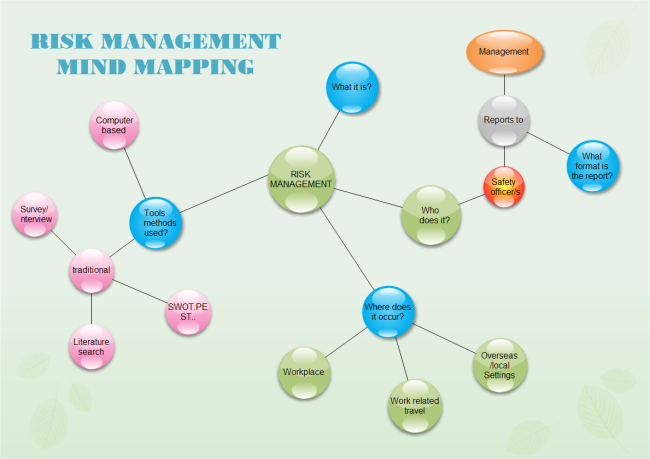
Once you have a general theme for a speech, I suggest you capture on one piece of paper all possible content you could address within the theme. I use the bubble technique to capture all possible speaking points.  The bubble technique is a creativity approach that I favor. Once the diagram is complete, set it aside for a day or so. 

Here is a sample visual of a bubble diagram https://www.edrawsoft.com/templates/images/risk-management-bubble-diagram.png

For example, suppose you were preparing a speech about sales. A bubble diagram could include elements such as your job experience, funnels, prospecting, customer knowledge, comparison shopping, B2B, B2C, decision making, trust, needs analysis, call planning and more.  Quite a quantity to speak on. 

 Every time you revisit the bubble diagram, you might add a few more bubbles. In this sales example, maybe you’ll add open-ended questions and clarifying objections.  

Be Confident That You Have Sufficient Material

A bubble diagram should get you to a point where you believe you have more than enough possible speaking points and usable content. As you prepare the bubble diagram, I advise you avoid self-editing, correcting grammar and punctuation, and simply let your creativity flow. The purpose of creativity tools is to unlock creativity. Editing will slow your creative flow. The diagram is not your final product, only a tool to help you develop your final product.

Too Much Material for an Audience

A bubble diagram will reveal many speaking points.  Usually, it will uncover too much material to speak on, although some speakers will try to speak to all. However, when someone tries to share everything, the lack of a clear purpose will require the audience to discern the speech purpose.  Speakers need to make listening easy for an audience, with a clear purpose, and a minimum of non-words, like ‘um’ and ‘ah’, so the audience does not need to work to filter as they listen.

Define the Purpose of Your Speech

To define purpose, you can ask yourself this question;

 What do I want this specific audience to think about differently, or to do as a result of my speech.

Select Your Speaking Points

Once you have answered this question, then select specific speaking points from the bubble diagram that support your purpose. You can then begin practicing, or formally writing a document or an outline.

I usually use just an outline of speaking points and then aim to talk to each point for two to three minutes.  Therefore, six points that I talk on for two minutes each lasts about twelve minutes.  If I speak to each for three minutes the content amounts to eighteen minutes. With a brief opening and brief conclusion of another couple of minutes each, in which I introduce and then reinforce the purpose of the talk, the product is ready for practice and delivery.  I rarely fully write my speeches and instead use such an outline that enables me to practice the points out loud or in my head. This enables me to be more conversational when presenting. 


You Pick the Speech Title

When I’m invited to speak, I usually ask the host to assign me a title. When she suggests a title, that offers clarity on the impact the host wants from my talk. When I’m invited, it’s usually because of my experience in leadership, public speaking, sales and marketing. It’s unlikely that the host will suggest a title and theme that varies from these topics.  When I’m invited to speak it’s because someone saw me speak and liked my content, style, or audience engagement. When I understand why I have been invited, this helps set a general theme for my talk. An assigned title offers further clarity.


Conclusion

I’ve experienced presentations that have left me confused about what the speaker wanted to achieve with the audience.  You likely have as well. After such presentations, I’ve actually said “what was the purpose of that?”

To reduce the possibility that your speech purpose isn’t clear, I reinforce these steps;

1.     Define all possible speaking points

2.     Define the purpose of your speech

3.     Select the speaking points that support your speech purpose

Sunday, 19 February 2023

Readers Digest - 7 Magic Phrases to Help You Nail Public Speaking

Around six years ago I was contacted for this linked article in Readers Digest to offer one phrase that is helpful to public speakers.  I remember that I had to think for a moment about a phrase that I find helpful.  What would you have suggested?

I’m impressed with how Readers Digest reuses material.  This content remains valid. It was republished on January 23, 2023.  

https://www.rd.com/list/public-speaking-tips/

The linked article on listening skills is very good as well https://www.rd.com/list/how-to-listen/


Monday, 6 February 2023

A Very Brief Keynote - Outside of my Comfort Zone

Recently I was asked to keynote an online event for a group in the United Kingdom. The event was organized to inform and inspire volunteers to offer for available roles.  After my keynote, there would be a series of past leaders, who had served in the positions, and each would offer reflections on the position and how it aided in their personal development.  My job was to broadly inspire desire in people to step forward.  The event was recorded and a link to the content is provided below.

While preparing to construct the speech, I knew that I had much scholarly material to draw from, and more personal experience and stories, which resonate best with most audiences.

When I sought to better understand the organizers specific needs, I asked how long they’d like me to speak for, what was my time allocation.  I was a little taken aback when I was told I had five minutes to deliver the keynote. This might be the shortest keynote ever. 

Constraints Inspire Creativity and Motivation

I wasn’t offended as I knew the organizers needed to manage an agenda, and they soon sent a copy of their very full agenda.  However, I was surprised - and newly motivated.  Sometimes a constraint does that for us. A constraint can inspire creativity and new motivation.

Instead of casually selecting amongst several talking points, I needed to be super focused on delivering high value in just five minutes. This assignment was outside my routine, and I was a little outside of my comfort zone of developing a twenty-to-forty minute keynote.

When the parameters are set, I’ll work to accommodate them.  In some cases, I might try to negotiate some more time, but these organizers had shared their agenda, it was tight, and ultimately the event did run longer than planned. When all was said and done, I spoke for almost six minutes, almost one full minute over my time allocation, while other presenters were more significantly over their allocation.


Typical Keynote Durations

A keynote speech is intended to set the scene, to emphasize a theme, and get an audience engaged and receptive for the remainder of the event. Typically, a keynote speech is at least fifteen minutes long, and this is my preference. Some can run to ninety minutes. I tend to organize my material in eight-to-ten minute components, so constructing and assembling for twenty-to-forty minutes or longer isn’t an issue. 

The challenge becomes researching and understanding the audience needs, selecting content, ensuring relevance, and then planning transitions and the emphasis of key points. I work to ensure relevance by briefly reviewing a speech plan with one or more of the organizers.

For a sample of an excellent keynote speech, or in this case a commencement speech, take a look at the text of Steve Job’s work at Stanford in 2015. This speech is fifteen minutes long, is comprised of three stories, and offers many lessons for speakers. The text is available here https://news.stanford.edu/2005/06/12/youve-got-find-love-jobs-says/


Using Time Constraints

Self-imposed time constraints can be helpful. I sometimes impose a time constraint on myself in order to trick myself into making some small progress when I’m procrastinating on a project, or I’m unsure of what direction to take a project. I’ll allocate fifteen minutes and commit to doing something. Surely, I can spend fifteen minutes to get something done.

Here's an example of how short time constraints work for me. I recently used this technique again for an upcoming project I had been avoiding. During that fifteen minutes, as is typical, I started with some silent muttering to myself that fifteen minutes is very little time.  I quickly moved to the realization that I needed to talk with a specific person to clarify a project objective, and I emailed that person to arrange time to talk. Then I thought once that conversation was complete there were two probable directions the project might take, and I began to map what each path might look like.  I made progress.  Not significant progress, but some momentum is helpful.

I ended up spending forty minutes to achieve that progress, more than the fifteen minutes to which I had committed myself. However, I was energized and didn’t mind spending more time. This often happens for me.  I end up spending more than my fifteen-minute allocation because I become excited with the plan that was now in motion.

The recent keynote imposed a different time constraint, one that required me to deliver impact for the audience in a very short time.


Video Content

The event was recorded and a link to the content is below. The feedback I received after the event was good. I stayed for the entire event and was delighted that some of the later speakers made reference to content from my keynote. 

Kudos to Daniel Sanders and all of the organizers as they inspired applicants for every one of the available positions. That’s a tremendous success. A key part of that success, in my opinion, was being very clear on their purpose and goal in planning the event.

Should you wish to see the recording please visit this link (My section starts at the 5- minute mark)  https://youtu.be/kpCPdoFb28Q

Monday, 14 November 2022

How To Prepare a Long Duration Speech


Recently I published a post about crafting a basic speech in just five minutes.  This is helpful if you need to make a presentation with little or no notice. It happens, especially if you are known for some level of expertise in your organization. You can read the post here https://gycz.blogspot.com/2022/10/how-to-prepare-speech-in-five-minutes.html

After publishing that post, I received some e-mails asking how to prepare for longer presentations. I do like receiving questions or seeing comments posted to the blog page.  I’ll share my approach for longer speeches.

A Series of Short Speeches

It can seem a daunting task to prepare a presentation that lasts twenty minutes, or forty minutes, or perhaps longer, however, a helpful way to plan for a longer presentation is to think of it as a series of smaller, well connected short speeches. My sweet spot is twenty to forty minutes so I tend to guide requests to this range, and this works for most meeting planners.

Planning with Bubbles

When I need to deliver a longer presentation, I begin planning by creating a bubble diagram, which is a creativity technique. Here’s an example of a bubble diagram https://bit.ly/3tjX5GD

I use a bubble diagram to visually capture all of my possible material on one page.  While I use the bubble technique, some people are more familiar with other creativity techniques, such as the fish bone technique. A key for any creativity tool is to capture ideas without judgement, to creatively generate ideas, or in this case to creatively capture possible content, or talk points. To be clear, when documenting these talk points, I avoid editing and judging with thoughts like ‘this doesn’t belong.’  Initially I want to quickly and non-judgementally document all possible content, and let the creative juices further inspire other ideas that might not be immediately obvious when staring at a blank page.

Creating a Bubble Diagram  

To begin generating ideas I place a circle, a bubble, in the center of the page with the core theme, for example “Speech Development.”  Then I start placing related ideas in surrounding bubbles, for example, “organization,”” use of notes,” “define purpose,” or “ relevant stories.”  Then I usually break some of the related bubbles into smaller components, for example referencing some specific stories. 

After a first version of the bubble diagram is complete, I put this away for at least 24 hours.  Later when I review it, I always have new ideas, and new content with a bubble or two to add.

Capture All Possible Talking Points  

My purpose in performing this exercise is to satisfy myself that I’ve captured all, or virtually all, of my knowledge and possible talking points on the page. That gives me confidence that I have lots of usable content for a longer speech.  I also use this approach when I coach people on speech development.

As I review the diagram, I consider each bubble and assess whether each point is substantial. My measure of substantial is that I could speak to each point for two minutes or more.  

Purpose Drives Content

The next step is the most important.  I ask myself ‘what is my purpose in speaking to this specific audience on this day?’  What exactly do I want the audience to understand, or to do differently. Purpose drives content.  This forces me to give consideration to the expertise level of the audience, and why they’ve invited me to speak.

What to Keep, What to Use on Another Day

Once I’ve defined my presentation purpose, I can choose the bubbles that support my purpose. At this point, I usually have to set aside some material I really would like to use, but that does not support the purpose of my speech. Once content is selected, then I can experiment with sequencing the ideas, and refining my speaking points.

Conclusion

This is a short introduction to my method of preparing longer presentations. There will always be discernment in defining purpose and selecting content.

Practice, Practice, Practice

If you wish to excel in public speaking, you will need to practice.  Public speaking is a skill, and skills require practice.  The best athletes in the world practice basic skills regularly.

My key practice venue is my Toastmasters club. I have been a member of Toastmasters since 1987 and I remain for many reasons. One is to regularly practice these skills including 2-minute impromptu speeches and 5–7-minute speeches.  Public speaking is a skill and skills require practice if you expect them to be sharp.


Wandering About, Messing About - Changing Perspective

When I travel, I find that I become super alert and aware. Everything seems new and different, and I’m more appreciative of everything aro...